
Wound Care and Diabetes: Why Blood Sugar Control Matters for Healing
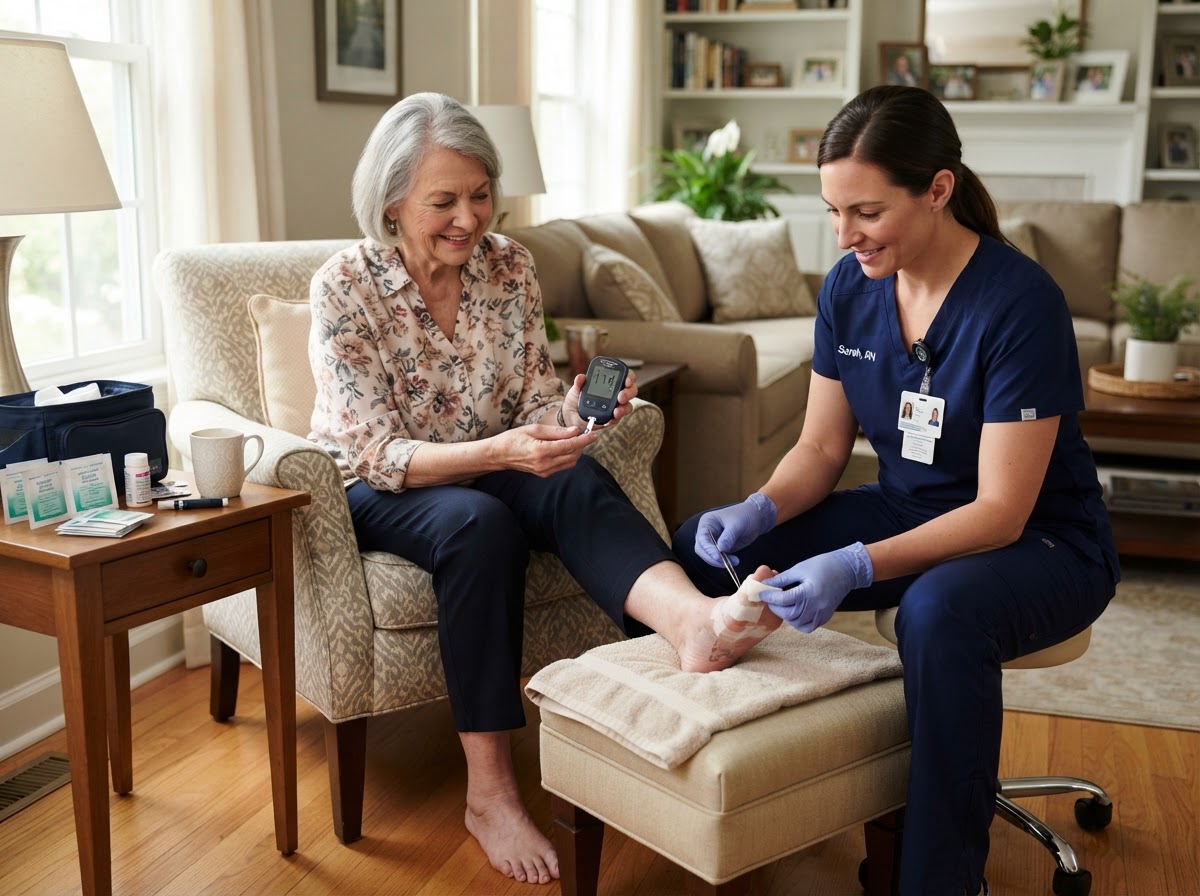
High blood sugar quietly undermines wound healing. Learn why glucose control is essential for diabetic wound recovery and how in-home care helps in Broward County.
Content reviewed for accuracy by our clinical network • Last updated: September 2026
The Connection Between Diabetes and Wound Healing
If you have diabetes and a wound that is not healing, your blood sugar may be playing a bigger role than you realize. Diabetes affects wound healing in several ways at once, and understanding those connections helps explain why a wound that seems small can become a serious problem. For patients managing diabetic foot ulcers at home in Broward County, blood sugar control is not a side issue — it is central to whether and how fast a wound heals.
Healing is a complex process that depends on blood flow, immune function, and the body's ability to build new tissue. Diabetes can interfere with all three. The good news is that improving glucose control, even modestly, can restart or accelerate healing that has stalled. This is one of the most empowering facts in diabetic wound care: the choices you make about blood sugar directly affect the wound on your foot or leg.
How High Blood Sugar Slows Healing
Elevated blood glucose affects healing through several mechanisms. First, it impairs the function of white blood cells, the body's primary defense against infection. When white blood cells do not work effectively, bacteria can gain a foothold in the wound, leading to infections that are harder to clear and that further delay healing. This is why diabetic wounds are more prone to becoming infected wounds.
Second, over time diabetes damages blood vessels, reducing circulation to the extremities — especially the feet and lower legs. Good circulation delivers the oxygen and nutrients the wound needs to heal and carries away waste products. When circulation is poor, the wound receives less of what it needs and heals slowly or not at all. This is related to why some diabetic patients also develop arterial ulcers.
Third, high blood sugar slows collagen production, the protein that forms the structural framework of new tissue. Without enough collagen, the new tissue that does form is weak and prone to breaking down. Finally, diabetes often causes neuropathy — nerve damage that reduces sensation in the feet. A person with neuropathy may not feel pain from a small blister or pressure point, so it goes unnoticed and worsens into a deeper ulcer before they realize there is a problem.
Why Neuropathy Makes Foot Wounds Dangerous
Reduced sensation in the feet is one of the most dangerous effects of diabetes for wound care. Most people feel pain when something is wrong — a rock in a shoe, a blister forming, a cut. A person with diabetic neuropathy may feel none of that, so a small injury goes unnoticed and unprotected. By the time it is found, it may already be a deeper wound.
This is why daily foot inspection is so important for diabetic patients. Look at the entire foot — top, bottom, between the toes, and around the heels — every day. Use a mirror or ask a family member if you cannot see the bottom of your feet. Look for cuts, blisters, redness, swelling, or any change in skin color. Catching a problem when it is still small is far easier than treating a full ulcer. Proper footwear, never walking barefoot, and keeping nails trimmed carefully all reduce the risk of injury.
Practical Steps to Improve Blood Sugar Control
Improving glucose control does not require perfection — it requires consistency. Take all diabetes medications exactly as prescribed, including insulin and oral medications. Do not skip doses, and if your readings are consistently high, talk to your physician about whether an adjustment is needed rather than waiting. During wound healing, your medication needs may change because the stress of the wound can raise blood sugar, so more frequent monitoring is often recommended.
Food choices matter. Focus on meals with lean protein, non-starchy vegetables, high-fiber whole grains, and healthy fats. Limit refined carbohydrates, sugary drinks, and processed snacks, which cause blood sugar spikes. Eating at consistent times and pairing carbohydrates with protein and fiber helps keep glucose steady. If you need help, ask your physician for a referral to a registered dietitian who understands diabetes. The American Diabetes Association - Florida offers local education and support.
Regular, gentle activity — as your physician allows — improves how the body uses insulin and supports circulation. Even short walks after meals can help. Staying hydrated, managing stress, and getting enough sleep all influence blood sugar as well. If you smoke, quitting is one of the single most impactful things you can do for both your diabetes and your wound, because nicotine constricts blood vessels and worsens circulation.
How In-Home Care Supports Diabetic Wound Healing
In-home wound care is particularly valuable for diabetic patients because it brings a licensed clinician to you on a regular schedule, which means the wound is assessed consistently by someone trained to spot early changes. Your clinician chooses the right dressing for the wound's current stage, performs debridement when needed to remove dead tissue, coordinates with your physician on infection treatment, and watches for the signs that the care plan needs to change.
For diabetic foot ulcers, offloading — reducing pressure on the wound — is essential, and your clinician can recommend the right footwear or devices. They also teach you and your family how to care for the wound between visits and how to inspect the feet daily. This combination of professional care and educated self-care is what heals diabetic wounds. Understanding your insurance coverage matters here too — Medicare Part B typically covers skilled wound care visits at home when ordered by your physician, so cost does not have to be a barrier to the consistent care diabetic wounds require.
When to Seek Help Immediately
Some situations need immediate attention. If you notice spreading redness, warmth, increasing pain, a foul odor, drainage that changes color or amount, or a fever, call your clinician or physician right away. If the wound suddenly gets deeper, larger, or exposes more tissue, do not wait for the next scheduled visit. For diabetic patients, an infection can progress quickly, and early treatment makes a significant difference in whether the wound can be healed and the limb preserved.
If you see black or dark tissue forming, if the foot changes color or temperature, or if you have severe pain that suddenly stops (which can indicate a serious change in blood flow), seek care immediately. These are not situations to watch at home. For slow-healing wounds in particular, professional assessment early prevents the kind of complications that lead to longer, harder recoveries.
Conclusion
Blood sugar control and wound healing are deeply connected, and for diabetic patients this means that managing glucose is one of the most important things you can do for your wound. By monitoring regularly, eating consistently, taking medications as prescribed, inspecting your feet daily, and partnering with an in-home clinician, you give your body what it needs to close the wound and prevent it from returning. If you are a Broward County patient with diabetes and a wound that is not healing, call Wound Care Broward at (954) 477-6688 or use the contact form to request a provider call.
Frequently Asked Questions
Q: Can high blood sugar really stop my wound from healing?
A: Yes. Elevated glucose impairs immune function, reduces circulation, and slows collagen production, all of which can stall healing even with good wound care.
Q: How often should I check my blood sugar while healing?
A: More frequently than usual is often recommended during wound healing, because the stress of a wound can raise glucose. Follow your physician's specific guidance.
Q: Why do I need to check my feet every day?
A: Diabetic neuropathy can reduce sensation, so you may not feel a small injury. Daily inspection catches problems while they are still small and easy to treat.
Q: Should I change my diet while my wound heals?
A: Focus on lean protein, non-starchy vegetables, high-fiber whole grains, and healthy fats. Limit refined carbohydrates and sugary drinks. A dietitian can help tailor a plan.
Q: Does Medicare cover in-home care for a diabetic foot ulcer?
A: Medicare Part B typically covers skilled wound care visits at home when ordered by your physician. Our team verifies your coverage before care begins.