
When Family Caregivers Should Step Back and Call a Professional
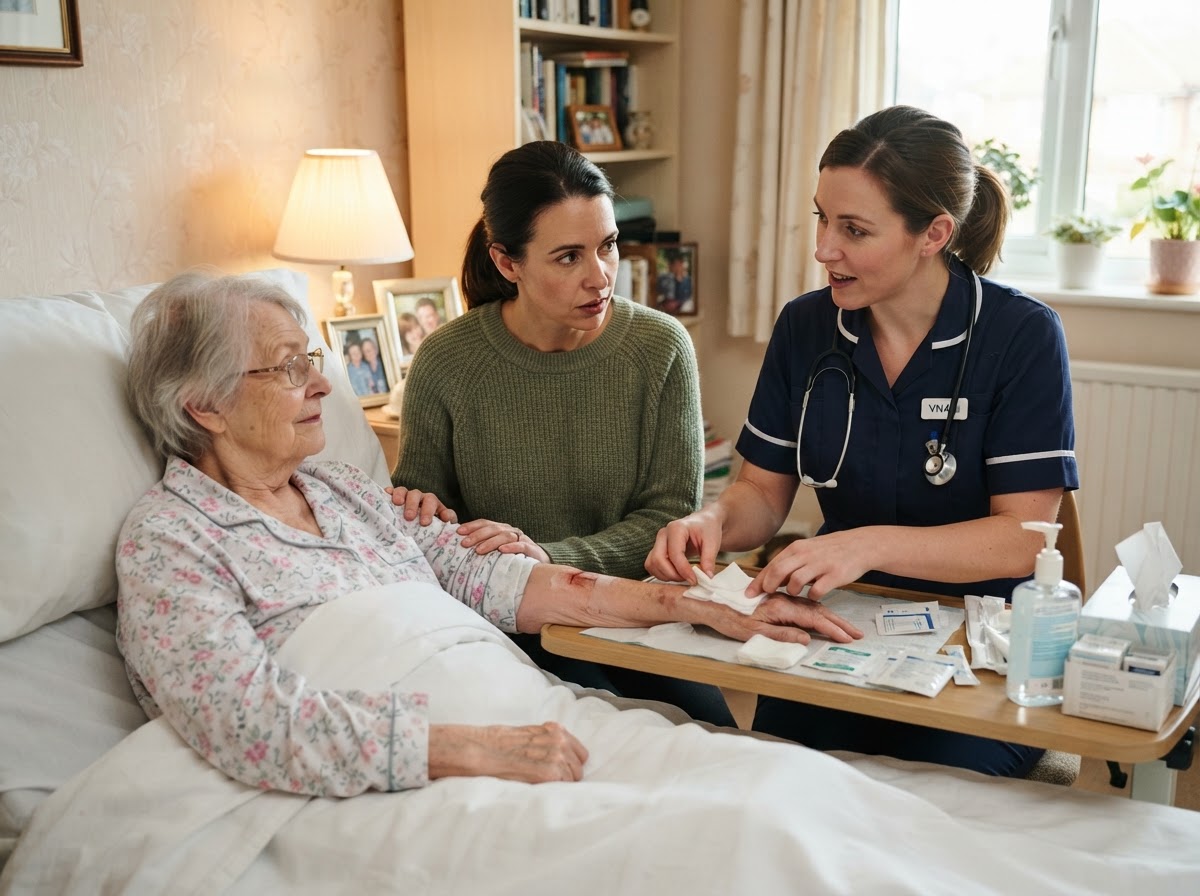
Family caregivers do incredible work, but some wound situations need a licensed clinician. Learn where the line is and when to ask for help in Broward County.
Content reviewed for accuracy by our clinical network • Last updated: September 2026
The Role Family Caregivers Play
Family caregivers are the backbone of recovery at home. You know the patient better than anyone, you notice small changes before anyone else, and your daily help with meals, medication, and comfort makes healing possible. For many patients in Broward County, a family member is the difference between recovering at home and needing to be somewhere else. That role is invaluable, and it is not in question here.
What this guide addresses is a different and equally important question: when does a wound situation move beyond what a family caregiver can safely manage alone? Knowing where that line is does not diminish your role — it protects the person you are caring for and protects you from carrying a burden that is genuinely a clinical one. The goal is a partnership, where you do what you do best and a licensed clinician steps in for what requires training.
Signs the Wound Needs a Clinician
Some wound situations clearly call for a professional. If the wound is not healing after two weeks of consistent care, it may have an underlying cause — poor circulation, infection, or a condition like diabetes — that basic home care cannot address. A wound that is getting larger, deeper, or more painful instead of smaller is a sign that the current approach is not working. Any sign of infection — spreading redness, warmth, increasing pain, yellow or green drainage, odor, or fever — needs prompt clinical attention.
Wounds with significant drainage that soaks through dressings, wounds with exposed tissue or bone, and wounds that smell despite clean dressing changes all need a clinician's assessment. For pressure ulcers that reach deeper tissue, diabetic foot ulcers, and venous leg ulcers, professional management from the start gives the best chance of healing and prevents the wound from worsening.
If your physician has ordered a specific treatment like Wound VAC therapy or compression, that care requires a trained clinician. These are not tasks a family caregiver can take over without support, and trying to do so risks harming the patient.
When You're Unsure
One of the hardest moments for a caregiver is the gray area — the wound is not obviously infected, but something looks different, and you are not sure whether to call. The best guidance is this: when in doubt, call. A phone call to your clinician costs nothing but a few minutes, and it can prevent a serious complication. Your in-home nurse would always rather hear from you early than learn about a problem after it has progressed.
Take a photo of the wound when you are unsure and share it with your clinician if they offer that option. Describe what has changed — more drainage, a new color, a different smell, more pain. You do not need to diagnose the problem; you just need to report what you see. That is exactly the information a clinician uses to decide whether to come sooner.
Trust your instincts. You spend more time with the patient than anyone, and if something feels wrong, it is worth checking. Caregivers often notice subtle changes — less appetite, less energy, more confusion in an older patient — that can accompany a developing infection before the wound itself looks dramatically different.
What a Professional Adds That Home Care Alone Cannot
A licensed wound care clinician brings training and tools that go beyond what family caregiving provides. They can assess the wound's depth and tissue type, identify infection early, choose the right dressing for the wound's current stage, perform debridement when needed, and coordinate with your physician on medications and the overall care plan. They also bring consistency — the same clinician seeing the wound over time catches the small changes that signal healing or trouble.
Equally important, a clinician teaches. When a nurse comes to your home, you can watch, ask questions, and learn proper technique for between-visit care. This education builds your confidence and skill as a caregiver, so you are better equipped to do the parts that are yours to do. For surgical wounds and slow-healing wounds, this partnership approach consistently produces better outcomes than either the caregiver or the clinician working alone.
Caregiver Burnout Is a Clinical Concern Too
Caring for someone with a serious wound is physically and emotionally demanding. Many caregivers push themselves to the point of exhaustion, skip their own medical appointments, and feel guilty for asking for help. But a burned-out caregiver cannot provide the consistent, attentive care a healing wound requires. Recognizing when you need support is part of good wound care, not a failure.
In-home professional visits relieve some of that pressure. Knowing a trained clinician is handling the wound care gives you space to rest, attend to your own health, and focus on the companionship and daily support that only you can provide. The Area Agency on Aging of Broward County offers resources and support specifically for family caregivers, including respite options.
Making the Call
If you are a family caregiver in Broward County and you recognize any of the signs in this article — a wound that is not healing, signs of infection, a treatment that requires a clinician, or simply the feeling that something is not right — it is time to reach out. Getting a licensed clinician involved does not replace you; it strengthens the care the person you love receives. Understanding your insurance coverage can ease the worry about cost, as Medicare Part B typically covers skilled wound care visits at home when ordered by a physician.
You have been doing hard, important work. Asking for professional help is one of the most caring decisions a caregiver can make.
Conclusion
Family caregivers are essential to healing at home, and knowing when to bring in a licensed clinician is part of doing that job well. By recognizing the signs that a wound needs professional care, trusting your instincts in the gray areas, and accepting support before burnout sets in, you give the person you are caring for the best chance at a full recovery. If you are caring for someone with a wound in Broward County and need professional in-home support, call Wound Care Broward at (954) 477-6688 or use the contact form to request a provider call.
Frequently Asked Questions
Q: How do I know if I'm doing enough as a caregiver?
A: If the wound is healing steadily and the patient is comfortable, you are doing a lot. If the wound is not improving after two weeks, it is time to add a clinician to the team.
Q: Will a nurse replace me as the caregiver?
A: No. A clinician handles the skilled wound care and teaches you, but you remain central to the patient's daily recovery and comfort.
Q: What if I can't tell whether the wound is infected?
A: Call your clinician and describe what you see. You do not need to diagnose — reporting changes is exactly what helps them decide whether to visit sooner.
Q: Is it normal to feel overwhelmed as a caregiver?
A: Yes, completely. Caring for a wound is demanding. Respite resources and professional in-home visits exist to support you, not to replace you.
Q: Does Medicare cover in-home wound care for my family member?
A: Medicare Part B typically covers skilled wound care visits at home when ordered by a physician. Our team verifies coverage before care begins.