How South Florida's Heat and Humidity Affect Wound Healing
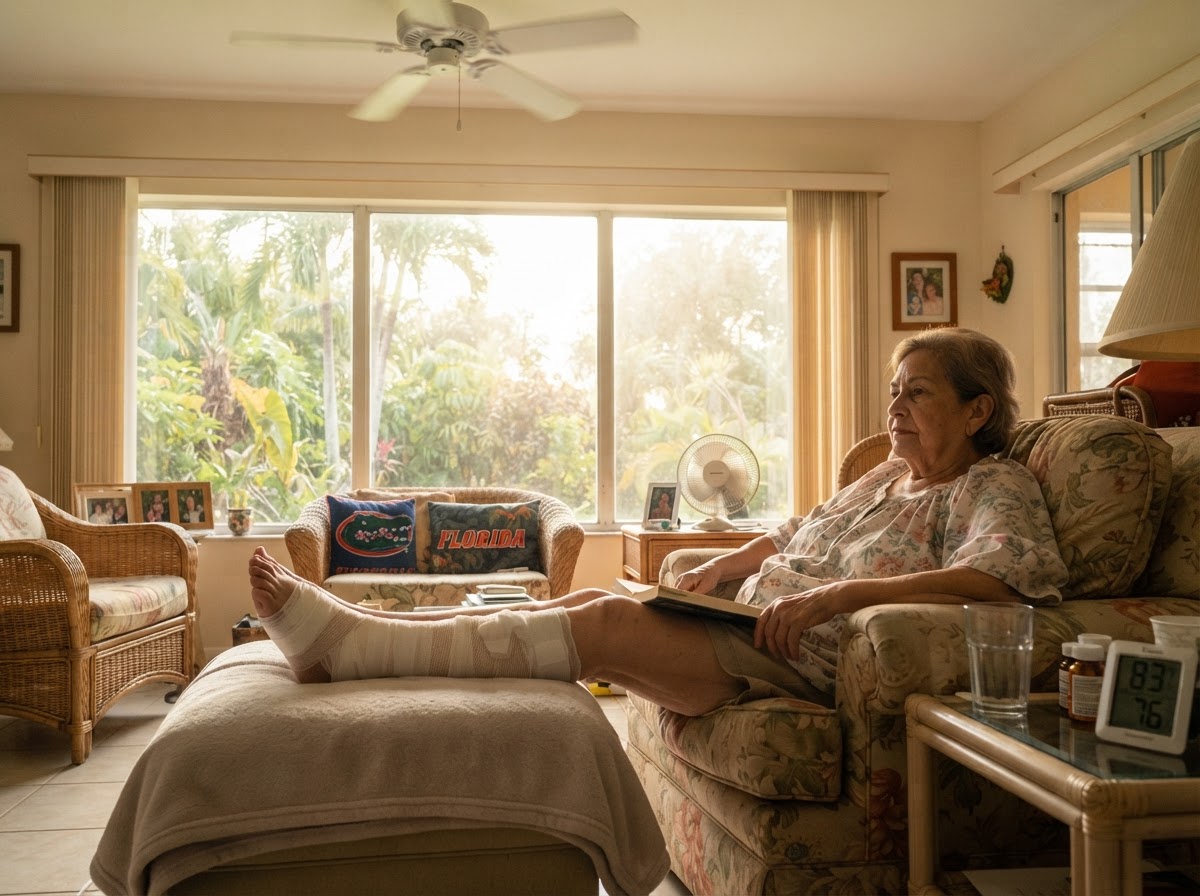
Broward County's warm, humid climate can influence how wounds heal at home. Learn what to watch for and how to protect your wound during the hottest months.
Content reviewed for accuracy by our clinical network • Last updated: September 2026
Why Climate Matters for Wound Care
Most wound care advice focuses on dressings, medications, and infection signs, but the environment around you plays a real role in how a wound heals. South Florida's heat and humidity create specific conditions that affect the skin, the dressing, and the wound itself. For patients managing wounds at home in Broward County, understanding these effects helps you adapt your routine and avoid problems that are more common in a tropical climate.
Heat and humidity influence three things that matter for healing: how much you sweat, how well a dressing stays in place, and how easily bacteria grow. Each of these can either support or undermine your recovery depending on how you manage them. The good news is that with a few adjustments, most patients in South Florida heal just as well as patients anywhere else.
Sweat and the Skin Barrier
When the temperature rises, the body sweats to cool itself. Sweat is mostly water and salt, and when it accumulates under a dressing or in a skin fold near a wound, it macerates — softens and weakens — the surrounding skin. Macerated skin is fragile, pale, and prone to breaking down, which can enlarge the wound or create new wounds nearby. This is especially relevant for wounds on the feet, under the abdomen, or in areas where skin touches skin.
To manage this, keep the indoor environment as cool and dry as is comfortable. Air conditioning and fans help reduce sweating, and keeping the wound area clean and dry between dressing changes matters more in summer than at other times. If you notice the skin around the wound looking white, wrinkled, or soggy, mention it to your clinician — the dressing plan may need to be adjusted to allow the skin to dry more between changes. For patients with venous leg ulcers, elevation and compression help reduce the swelling that worsens with heat.
Hydration is the other side of the coin. Sweating loses fluid, and dehydration thickens the blood and reduces circulation to the wound. Drink water consistently throughout the day, even if you do not feel thirsty, unless your physician has given you a fluid restriction. Pale yellow urine is a good sign you are drinking enough.
Keeping Dressings Secure in the Heat
Heat and sweat are the enemies of adhesive. Medical tape and adhesive dressings that hold perfectly in a cool, dry room can peel, curl, or slide in South Florida's humidity, especially if you are active or the wound is on a joint. A dressing that shifts exposes the wound, collects sweat and bacteria, and stops doing its job.
Your clinician can recommend dressings and tapes designed to hold better in humid conditions, such as silicone-based adhesives or waterproof barriers. Avoid adding layers of regular tape on top of a peeling dressing, which can create a messy, ineffective wrap. If a dressing comes loose, change it rather than trying to reinforce it, and let your nurse know if dressings are consistently failing in the heat so they can adjust the plan. For diabetic foot ulcers, keeping the dressing dry and secure is especially important because moisture and friction together quickly worsen the wound.
Bacteria Love Warmth and Moisture
Bacteria grow fastest in warm, moist environments, which means South Florida's climate naturally raises the stakes for wound infection. A dressing that stays damp from sweat or humidity becomes a breeding ground, and any break in technique — unwashed hands, a contaminated surface — has a higher chance of leading to an infected wound in summer than in cooler months.
This makes the basics even more important: wash your hands before and after every dressing change, change damp dressings promptly, and keep the wound area as clean and dry as the treatment plan allows. Watch closely for early infection signs — increasing redness, warmth, odor, or drainage changes — and call your clinician early rather than waiting. In warm weather, infections can progress faster, so early attention is genuinely valuable.
Patients with conditions that already raise infection risk, such as diabetes or a weakened immune system, should be especially vigilant. Keeping blood sugar controlled supports immune function, and inspecting the wound and surrounding skin daily helps you catch changes early.
Sun, Swelling, and Circulation
Heat causes blood vessels near the skin to widen, which can increase swelling in the legs and feet — a particular concern for patients with venous ulcers or arterial ulcers. More swelling means more pressure in the tissues, more drainage from the wound, and slower healing. Elevating the legs above heart level for periods during the day, wearing compression as prescribed, and avoiding prolonged standing in the heat all help.
Direct sun exposure on a healing wound or a new scar is not good for the tissue. UV exposure can darken a scar, weaken new skin, and increase discomfort. If you spend time outdoors, keep the wound covered with clothing, and once your clinician clears you, use sunscreen on the healed area to protect the new skin. New skin is more sensitive to sun damage than mature skin, so protection matters for months after the wound closes.
Hurricane Season and Wound Care Planning
Broward County's warmest months overlap with hurricane season, and a storm can disrupt power, supplies, and access to care. If you rely on a Wound VAC device, it needs electricity to run, so a battery backup or a plan for extended outages is essential. Keep at least a week's worth of dressing supplies on hand, and have your clinician's contact information written down in case cell service is limited.
Talk to your in-home clinician about a storm plan before a weather event arrives. They can help you stock the right supplies, understand how to manage your device during an outage, and know when to seek emergency care. Understanding your insurance coverage for extra visits or supplies can also reduce stress during an already anxious time.
Conclusion
South Florida's heat and humidity add a layer of complexity to wound care, but they are manageable with the right routine. By staying hydrated, keeping dressings clean and secure, watching closely for infection, protecting the wound from sun and swelling, and planning ahead for storm season, you can keep your healing on track through the warmest months. Your in-home clinician understands the local climate and can tailor your care plan accordingly. If you are managing a wound at home in Broward County, call Wound Care Broward at (954) 477-6688 or use the contact form to request a provider call.
Frequently Asked Questions
Q: Can I go outside in the heat with a healing wound?
A: Yes, with care. Keep the wound covered, avoid direct sun on the area, stay hydrated, and change the dressing if it becomes damp from sweat.
Q: Why does my dressing keep peeling off in the summer?
A: Heat and sweat weaken adhesives. Ask your clinician about dressings and tapes designed for humid conditions, and change loose dressings rather than reinforcing them.
Q: Should I drink more water when it's hot?
A: Yes, unless your physician has given you a fluid restriction. Sweating loses fluid, and dehydration reduces circulation to the wound. Aim for pale yellow urine.
Q: Does heat make my leg ulcer worse?
A: Heat can increase leg swelling, which raises pressure in the tissues. Elevation, compression as prescribed, and avoiding prolonged standing help manage this.
Q: What should I do about my Wound VAC during a power outage?
A: Have a battery backup and a plan. Talk to your clinician before storm season about managing your device during an extended outage and stocking supplies.