
In-Home Wound Care vs. Wound Clinic: Which Is Right for You?
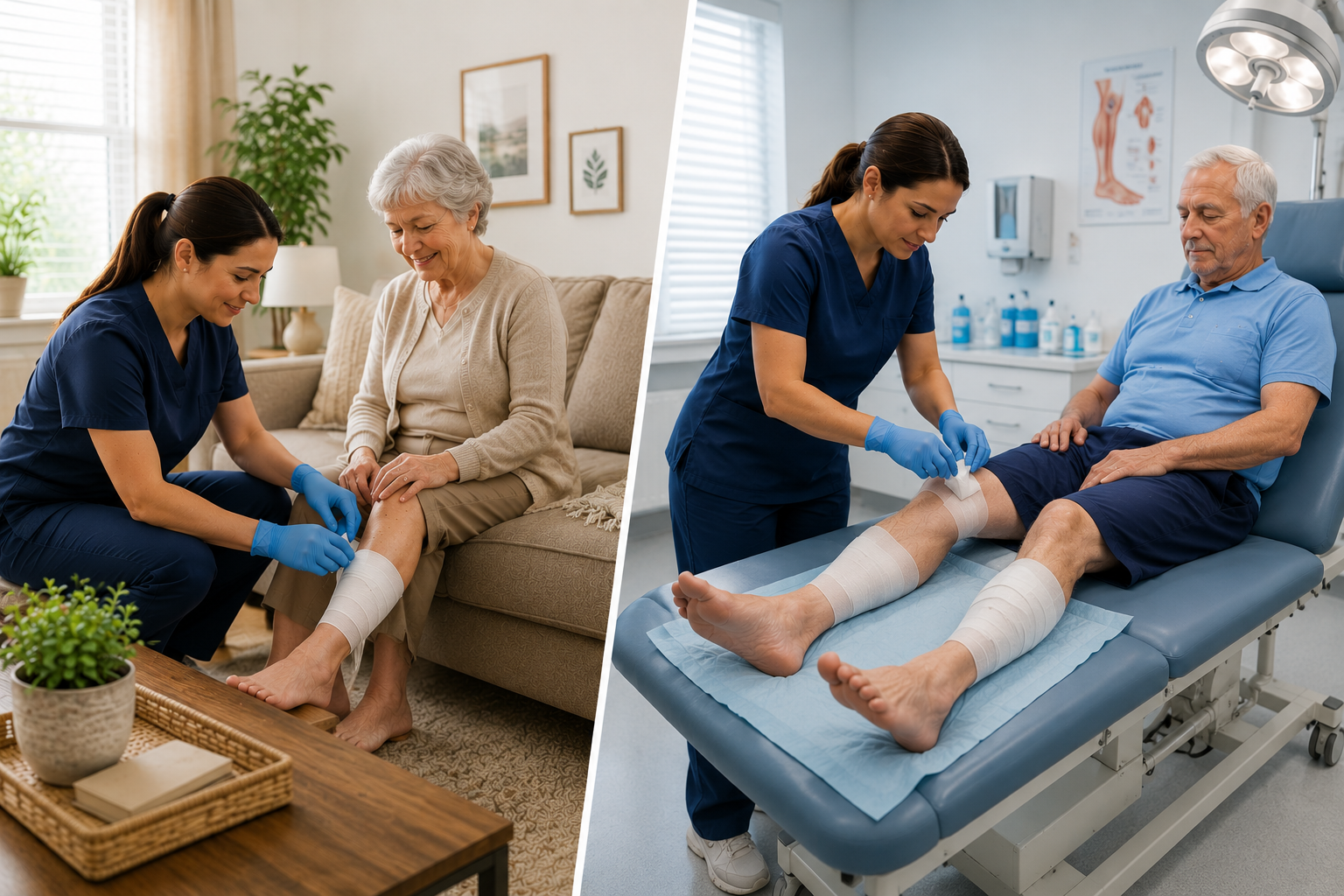
If you or a family member has a wound that needs professional treatment, you have options: a wound care clinic you visit in person, or a licensed clinician who comes to your home. Both can provide high-quality care — but for many patients in Broward County, one is clearly more practical than the other. Here's how to think through the decision.
When a Wound Clinic Makes Sense
Wound clinics are the right choice when your wound requires advanced interventions that are only available in a clinical setting — certain surgical debridements, hyperbaric oxygen therapy, or complex vascular procedures, for example. They're also a good fit if you're mobile, live close to a clinic, and your wound care schedule is manageable. In a clinical setting, healthcare providers have immediate access to specialized imaging equipment, operating rooms, and a multidisciplinary team of specialists who can collaborate on complex cases on the spot. For patients who require frequent surgical interventions or treatments that involve large, non-portable machinery, visiting a wound clinic is often the safest and most effective option.
Additionally, wound clinics can be beneficial for patients who require comprehensive diagnostic testing that cannot be easily performed in a home environment. Tests such as advanced vascular imaging, deep tissue cultures, or specialized biopsies are typically conducted within the clinic's controlled environment. If your physician determines that your wound's healing is being impeded by underlying conditions that require such rigorous testing and immediate, complex interventions, a wound clinic will likely be their primary recommendation. It's important to discuss these factors with your primary care provider or specialist to understand the specific needs of your wound and why a clinical setting might be recommended for your particular situation.
When In-Home Care Makes More Sense
For most patients managing chronic wounds at home, in-home care is the better fit for several reasons. The primary advantage is the elimination of the travel burden, which can be significant for individuals with limited mobility, severe pain, or underlying health conditions that make leaving the house difficult. In-home care brings the expertise of a licensed clinician directly to your doorstep, providing a level of convenience and comfort that a clinic simply cannot match. This approach not only reduces the physical strain on the patient but also alleviates the logistical challenges often faced by family caregivers who must arrange transportation and coordinate schedules for frequent clinic visits.
Mobility and travel burden: If you have limited mobility due to a recent surgery, neuropathy, a lower-extremity wound, or a chronic condition, getting to a clinic for repeated visits is physically demanding. Keeping an injured foot down during transit, sitting in a waiting room with legs dependent — these things directly work against healing for venous ulcer and diabetic foot ulcer patients in particular. The physical exertion required to travel to and from appointments can exacerbate pain, increase swelling, and potentially cause further trauma to the wound site. By receiving care at home, patients can remain in a comfortable, elevated position, minimizing stress on the affected area and promoting a more conducive environment for healing.
Infection risk: Clinics are high-traffic environments. For immunocompromised patients or those with open wounds, every clinic visit is an exposure opportunity. Care in your own home eliminates that variable. Hospitals and clinics, despite their stringent cleaning protocols, inherently harbor a variety of pathogens due to the sheer volume of sick individuals passing through their doors. For a patient with an open wound, this represents a significant risk of secondary infection. Receiving treatment in the familiar and controlled environment of your own home drastically reduces this risk, providing a safer setting for your recovery.
Consistency: Home-based care means the same licensed clinician comes to your home on a regular schedule, reviews your wound in the same environment each time, and coordinates directly with your physician. That continuity catches small changes before they become complications. In a clinic setting, you may see different providers on different visits, which can sometimes lead to fragmented care or missed subtleties in your wound's progression. A dedicated in-home clinician develops a deep understanding of your specific case, your home environment, and your personal health goals, allowing for highly personalized and responsive care.
Caregiver involvement: When a clinician comes to your home, family caregivers can observe, ask questions, and learn proper wound care technique for between visits. That education is harder to get in a 20-minute clinic appointment. In-home care naturally fosters a collaborative environment where family members can become active participants in the healing process. The clinician can evaluate the home setting, suggest practical modifications to improve safety and comfort, and provide hands-on training tailored to the specific resources available in the household. This empowers caregivers and significantly improves the overall quality of care the patient receives between professional visits.
What In-Home Care Can't Replace
In-home care isn't the right fit for every wound. If your wound requires imaging, surgery, hyperbaric oxygen, or a procedure that needs clinic equipment, your physician will direct you accordingly. In-home and clinic care are not mutually exclusive — some patients receive wound care at home and still see their vascular specialist or surgeon for periodic check-ins. It's crucial to understand that in-home clinicians operate under the orders of your referring physician and rely on clinical facilities for advanced diagnostic and surgical needs.
For instance, if a wound suddenly deteriorates and requires sharp debridement that goes beyond what can be safely performed in a home setting, or if there is a suspected deep bone infection requiring an MRI, a visit to a clinic or hospital becomes necessary. The goal of in-home care is to manage the ongoing, routine aspects of wound healing effectively, thereby reducing the frequency of clinic visits, but it does not replace the need for comprehensive medical facilities when complex interventions are required. Your healthcare team will continuously assess your progress and determine the most appropriate setting for your care at every stage of your recovery.
What Medicare Covers
Original Medicare Part B covers medically necessary skilled wound care services in the home when ordered by a physician. This includes dressing changes, wound assessment, debridement support, and monitoring — services that overlap significantly with what a wound clinic provides for the majority of wound care visits. Understanding your coverage is an essential part of making an informed decision about your care options. Medicare recognizes the value and efficacy of in-home wound care and provides substantial coverage for patients who meet the necessary criteria.
To qualify for this coverage under Medicare Part B, you must have a physician's order detailing the medical necessity of the skilled nursing services. Unlike Medicare Part A home health benefits, you do not necessarily need to be strictly "homebound" to receive Part B outpatient services in your home, although the convenience is certainly a primary benefit for those who are. The coverage extends to the professional services of the visiting clinician as well as many of the specialized dressings and supplies required for your treatment plan. Our team at Wound Care Broward assists in verifying this coverage upfront, ensuring you have a clear understanding of your benefits and any potential out-of-pocket costs before care begins.
Additional Considerations for Long-Term Wound Management
When dealing with chronic or complex wounds, the journey to complete healing often extends beyond the immediate clinical treatments. Long-term management requires a holistic approach that addresses not just the wound itself, but the overall health and lifestyle of the patient. This comprehensive perspective is essential for preventing recurrence and ensuring that the newly healed tissue remains resilient and healthy over time.
One of the most critical factors in long-term wound management is nutrition. The body requires a significant amount of energy and specific nutrients to repair damaged tissue and fight off potential infections. A diet rich in high-quality proteins, essential vitamins such as Vitamin C and Vitamin A, and minerals like zinc and iron plays a foundational role in the cellular processes of healing. Patients and caregivers should work closely with healthcare providers or a registered dietitian to develop a nutritional plan tailored to the patient's specific metabolic needs and any underlying conditions, such as diabetes or kidney disease, which may complicate dietary choices.
Hydration is equally important. Adequate fluid intake ensures that blood volume is maintained, allowing for the efficient transport of oxygen and nutrients to the wound site. It also helps to keep the skin supple and less prone to cracking or breaking down. For older adults, the sensation of thirst often diminishes, making it crucial to establish a routine for regular water consumption throughout the day, unless fluid intake is restricted due to a medical condition like heart failure.
Beyond diet, managing underlying health conditions is paramount. Chronic wounds are frequently a symptom of systemic issues such as uncontrolled blood sugar in diabetic patients, severe peripheral artery disease, or chronic venous hypertension. If these root causes are not aggressively managed, the risk of the wound stalling or a new ulcer forming remains exceptionally high. Regular follow-ups with primary care physicians and specialists are necessary to adjust medications, monitor vital health metrics, and ensure that the systemic environment supports local wound healing.
Physical activity, tailored to the patient's abilities and limitations, also plays a vital role. While resting an injured limb is often required initially, prolonged immobility can lead to muscle atrophy, decreased circulation, and a higher risk of pressure ulcers. Safe, guided exercises can improve blood flow, enhance cardiovascular health, and boost the immune system. Physical therapists can provide specific exercises that promote circulation without putting undue stress on the healing wound.
Mental and emotional well-being should never be overlooked. Dealing with a chronic wound can be exhausting, painful, and isolating, leading to anxiety and depression. These psychological factors can actually slow down the healing process by increasing stress hormones that impair immune function. Providing emotional support, encouraging participation in hobbies or social activities as much as possible, and seeking professional counseling when needed are all vital components of a comprehensive care plan.
Finally, education and empowerment are the ultimate tools for long-term success. Patients and their families must be actively involved in the care process, understanding the reasons behind specific treatments and the warning signs of complications. When individuals are equipped with the knowledge and resources they need, they become the most effective advocates for their own health, leading to better outcomes and a higher quality of life.
Conclusion
Choosing between a wound clinic and in-home wound care depends heavily on the specific requirements of your wound, your overall health, and your mobility. While clinics offer access to advanced machinery and immediate surgical interventions, in-home care provides unparalleled convenience, reduced infection risk, and highly personalized, consistent care in the comfort of your own environment. For many patients in Broward County managing chronic wounds, the ability to receive expert treatment without the physical and logistical strain of travel makes in-home care the optimal choice. If you're a Broward County patient whose wound needs consistent professional management and clinic visits are a burden, in-home care is worth a call. Wound Care Broward connects patients with licensed clinicians who come to you. Call (954) 477-6688 or use the contact form to request a provider.
Frequently Asked Questions
Q: Can I switch from a wound clinic to in-home care?
A: Yes, many patients transition to in-home care once their wound no longer requires the specialized equipment of a clinic. You will need a physician's order to initiate the in-home services.
Q: Will the in-home nurse communicate with my clinic doctor?
A: Absolutely. In-home clinicians work collaboratively with your referring physician or wound specialist, providing regular updates and ensuring your care plan is followed precisely.
Q: Are the treatments provided at home the same as those in a clinic?
A: For standard wound management, including complex dressing changes, monitoring, and basic debridement, the care is highly comparable. Clinics are reserved for procedures requiring large equipment or surgical environments.
Q: Is in-home wound care more expensive than visiting a clinic?
A: For patients with Medicare Part B, the coverage for medically necessary skilled nursing visits at home is generally very comprehensive. Our team verifies your specific benefits to clarify any costs.
Q: What if I have an emergency with my wound at home?
A: Your in-home care provider will give you specific instructions on what to do in an emergency. For life-threatening issues, you should always call 911 or go to the nearest emergency room.